Dental Implants
Dental Implant & Zirconia Crown for a Missing Upper Molar
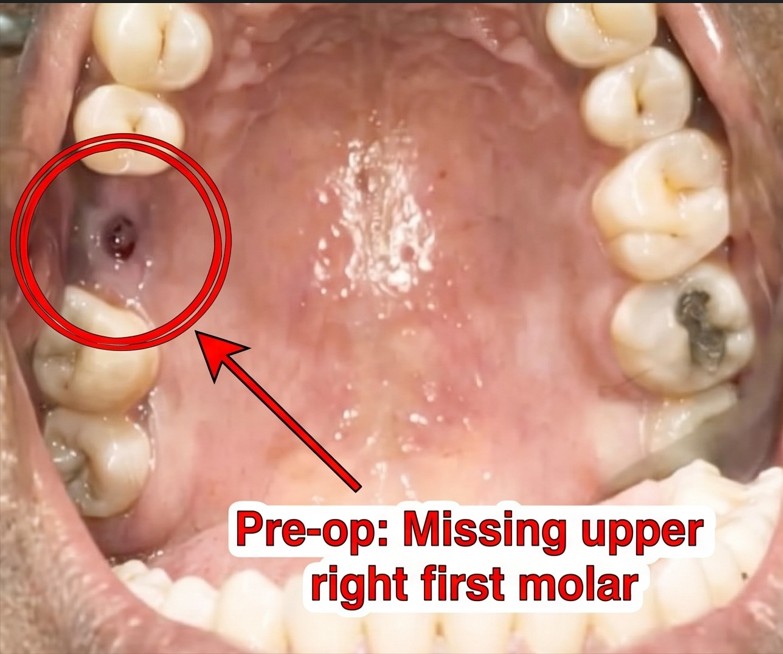
A missing upper first molar does more than leave a gap. It can make chewing on one side difficult, allow neighbouring teeth to drift, and affect the look of a smile. This case follows a 29-year-old man who came to Spark Dental Care with a missing upper right first molar (tooth 16) and wanted a fixed replacement that looked natural and worked comfortably. Below is the evaluation, implant placement, three-month healing period, and final screw-retained zirconia crown.
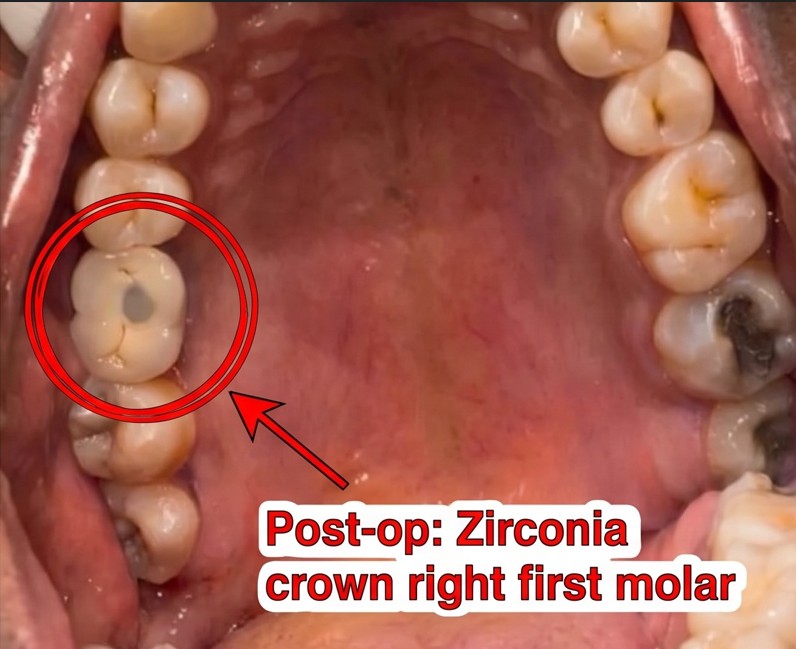
Before and after treatment
The patient at a glance
A young adult came to our Sithalapakkam clinic with a missing upper right first molar and a clear goal: a fixed replacement instead of a removable option. Here is a summary of the case:
- Patient: 29-year-old male
- Chief complaint: missing upper right first molar (tooth 16)
- Concern: wanted a fixed replacement to restore chewing function and aesthetics
- Evaluation: thorough clinical and radiographic assessment of the 16 region
- Treatment: dental implant placement, three months of healing, then a screw-retained zirconia crown
- Outcome: restored chewing function with a natural-looking, implant-supported tooth
Why a missing upper first molar should be replaced
The upper first molar is one of the main chewing teeth. When it is missing, the opposite lower molar has less contact, the teeth next to the gap can tilt or drift, and the bone in that part of the jaw no longer receives the same stimulation. A gap at the back of the mouth is also noticeable when some patients smile. Replacing the tooth with an implant-supported crown restores the chewing surface without relying on the neighbouring teeth, which is why many patients choose this option for a single missing molar.
Why teeth replacement matters dental implants for missing teeth
Clinical and radiographic evaluation
Before any treatment, we assessed the mouth and the 16 region with a clinical examination and radiographic views. This step tells us whether the implant can be placed in a suitable position, how much healthy bone is available, and what shape the final crown should take. Careful planning at this stage is what allows the implant to support a crown that looks like the other teeth and fits the bite comfortably. Every implant case is planned around the patient's own anatomy rather than a standard template.
How dental implants work dental implant cost in Chennai
- Checked the health of the surrounding teeth and gums
- Assessed the missing tooth space and the available bone with radiographs
- Planned the implant position with the final crown and bite in mind
- Confirmed that a fixed, implant-supported replacement was the right option
Dental implant placement at tooth 16
The dental implant was placed in the 16 region to act as an artificial root for the missing molar. Once positioned, it provides a stable foundation for the crown without cutting down the neighbouring teeth, as would be needed for a conventional bridge. The implant was then left undisturbed so it could bond with the bone - the process that makes an implant feel solid and function like a natural tooth root.
- Implant placed in the missing upper right first molar space
- Neighbouring teeth left untouched
- Implant acts as the foundation for the final crown
- Position planned to support both chewing function and aesthetics
Why the three-month healing period matters
After implant placement, this patient had a healing period of three months before the crown was fitted. During this time, the implant integrates with the surrounding bone, a process called osseointegration. Rushing this stage can compromise the stability of the restoration, so we allow the implant to become firm before taking the final impression and fitting the crown. For the patient, the wait is an investment in a replacement that is stable enough for everyday chewing.
- Allows the implant to integrate with the bone
- Creates a stable base for the crown
- Reduces the risk of a loose or failing restoration
- Helps the final bite feel comfortable and secure
Why a screw-retained zirconia crown
The final restoration was a screw-retained zirconia crown. Zirconia is strong, metal-free and tooth-coloured, which makes it a good match for a back molar that must handle regular chewing while still looking natural. Because the crown is screw-retained, it is fixed firmly in place and can be removed by the dentist if the implant or crown ever needs maintenance, without the cement residue that can sometimes irritate the gum around an implant.
Restorative dentistry and crowns the different types of dental crown
- Strong enough for the heavy chewing forces on a first molar
- Tooth-coloured and metal-free for a natural appearance
- Screw-retained for a secure fit and future retrievability
- Shaped to restore the chewing surface of the missing tooth
- Designed to blend with the surrounding teeth
The result
The missing upper right first molar was successfully replaced with an implant-supported zirconia crown. Chewing function was restored, the gap in the upper back tooth was closed, and the new tooth looked natural in the smile. The patient's fixed replacement was complete after a three-month healing period, with no need to rely on a removable denture or alter the neighbouring teeth.
What this case teaches
A single missing molar is a small-looking gap with a big job to do. Replacing it with a dental implant and a carefully made crown restores chewing, helps preserve the space and bone, and gives the patient a fixed tooth that looks like the rest of the smile. This case also shows why the planning and healing stages matter: the visible crown is only the final step in a process that begins with a careful evaluation and a well-placed implant.
Book a general dental check-up
- A missing first molar affects chewing, alignment and appearance
- An implant-supported crown replaces the tooth without preparing neighbouring teeth
- Adequate healing is essential for successful osseointegration
- Zirconia gives a strong, tooth-coloured result on a back molar
- A screw-retained crown is secure and can be removed for maintenance if needed
- Early assessment helps patients choose the right fixed replacement
Frequently asked questions
How is a missing upper molar replaced with an implant and crown?
A dental implant is placed in the space left by the missing tooth and acts as an artificial root. After a healing period, during which the implant bonds with the bone, a custom-made crown is attached to the implant. In this case, the missing upper right first molar was restored with a screw-retained zirconia crown after three months of healing.
What is osseointegration and why did healing take three months?
Osseointegration is the process where the implant becomes firmly bonded to the surrounding bone. This is what gives an implant-supported crown its stability. We allowed three months of healing in this case so the implant could integrate properly before it was asked to carry the forces of chewing.
What is a screw-retained zirconia crown?
It is a crown fixed to the dental implant with a screw rather than cement. Zirconia is a strong, tooth-coloured, metal-free ceramic, so the crown can handle molar chewing forces while looking like a natural tooth. Screw retention also allows the dentist to remove the crown if the implant or crown ever needs maintenance.
Will an implant crown for a missing upper molar look natural?
Yes. The crown is designed to match the colour, shape and position of the surrounding teeth. Zirconia is naturally tooth-coloured and does not create a dark line at the gum, which makes it a good choice for a visible molar. In this case, the final crown restored the appearance of the missing upper right first molar.
Can I chew normally after an implant and zirconia crown?
Once the implant has integrated and the crown has been fitted and adjusted, it is designed to restore normal chewing function. A first molar does much of the work of grinding food, so the crown is shaped and positioned to work with your bite. As with any implant, good oral hygiene and regular check-ups help protect the result.
How does Spark Dental Care plan dental implants in Sithalapakkam?
We begin with a clinical examination and radiographic evaluation to assess the missing tooth space, surrounding teeth and available bone. We then place the implant, allow it to heal, and fit a custom crown - as in this case, where a screw-retained zirconia crown restored tooth 16. Our clinic is at No.399, Medavakkam to Mambakkam Main Road, Sithalapakkam, and we serve Medavakkam, Vengaivasal, Kovilancheri, Perumbakkam, Ottiyambakkam, Madambakkam and Mambakkam. Call +91 82209 54866 to book a consultation.
A missing molar replaced with a fixed, tooth-coloured restoration - built to chew comfortably and look natural.
Replace a missing molar at Spark Dental Care
If a missing molar is making it hard to chew or affecting your smile, book a dental implant consultation at Spark Dental Care, Sithalapakkam, on the Medavakkam to Mambakkam Main Road. We serve Medavakkam, Vengaivasal, Kovilancheri, Perumbakkam, Ottiyambakkam, Madambakkam and Mambakkam. Call +91 82209 54866 or book online.